Google+ now finally open to the public "might" make me change my perception. Google+ (plus) launched early July on an invite only basis, which seems to have heavily skewed towards a geeky male US based audience. At the moment, Google+ really has nothing to offer in the social end ... yes, the way you organize friends is better (IMO) than Facebook, and ... ... ... well, that's it ... You might have heard me claim that it will compete against iCloud in the quest to conquer your hard data (photos, videos, music, files) but that's another post on its own. The first Google+ infographic was released an the numbers pretty much confirm it: 26 million users, 100% of which work in software engineering, web development, advertising, or related careers. Should be interesting to watch it shift (or not) now that Google+ is open to the public.
Perhaps one of the best features of Facebook Places was not released with the initial launch ... Looking back at the Facebook Places official video, the most compelling selling point is that Facebook helps you digitalize
Earlier today Facebook finally announced the official launch of Facebook places. Mashable, ReadWriteWeb, and others covered it live, but if you missed the announcement, here's what you have to know. BTW, one thing no one is talking about yet is Places within the Graph API. You can query recent checkins by users, pages, places: GET https://graph.facebook.com/[place/Page/user id]/checkins That alone is SO powerful! Anyways, starting today, you can immediately tell people about that favorite spot with Facebook Places. You can share where you are and the friends you're with in real time from your mobile device. Checking In with Friends Ever gone to a show, only to find out afterward that your friends were there too? With Places, you can discover moments when you and your friends are at the same place at the same time. You have the option to share your location by "checking in" to that place and letting friends know where you are. You can easily see if any of your friends have also chosen to check in nearby. To get started, you'll need the most recent version of the Facebook application for iPhone. You also can access Places from touch.facebook.com if your mobile browser supports HTML 5 and geolocation. Go to Places on the iPhone application or touch.facebook.com site and then tap the "Check In" button. You'll see a list of places near you. Choose the place that matches where you are. If it's not on the list, search for it or add it. After checking in, your check in will create a story in your friends' News Feeds and show up in the Recent Activity section on the page for that place. Places is only available in the United States right now. But we expect to make it available to more countries and on additional mobile platforms soon.
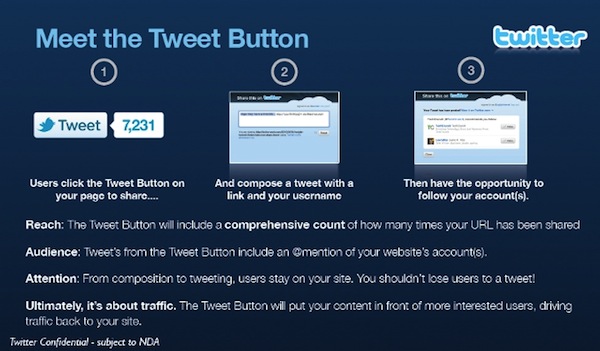
Twitter just launched their official Tweet this button about time ... it comes in three versions (110×20, 55×20, 55×63) with five different settings for customization. You can set the URL obviously, the Tweet text default, via @SapientNitro or some user, related, and count box position. You can embed with an iframe or embed with a JavaScript hosted at Twitter that will style a pre determined class in a link. Pretty straight forward of course; how much can there really be for a simple Tweet this button. You can see it server directly from Twitter here. Step by step instructions by Mashable:
So W+K has been having fun with Old Spice lately ... It's actually quite impressive to see how every video they produce for Old Spice gets anywhere from 1 to 12 million views ... The latest one, called Old Spice | Questions got 3 million views in less than 1 week. <object classid="clsid:d27cdb6e ae6d 11cf 96b8 444553540000" width="560" height="340" codebase="http://download.macromedia.com/pub/shockwave/cabs/flash/swflash.cab version=6,0,40,0" <param name="allowFullScreen" value="true" / <param name="allowscriptaccess" value="always" / <param name="src" value="http://www.youtube.com/v/uLTIowBF0kE&hl=en US&fs=1?rel=0" / <param name="allowfullscreen" value="true" / <embed type="application/x shockwave flash" width="560" height="340" src="http://www.youtube.com/v/uLTIowBF0kE&hl=en US&fs=1?rel=0" allowscriptaccess="always" allowfullscreen="true" </embed </object
I spoke to Omar L. Gallaga from austin360 blog right before my SXSW panel about emerging trends, including mobile, augmented reality, and social media, and he posted this interview on their blog; wanted to share a few PoV's that I provided ... American Statesman: As smartphones have gotten more popular, we’ve been hearing more and more about augmented reality. Can you explain to us what it actually is and how it’s being used? Augmented Reality (AR) is the ability of combining digital and real world aspects to provide a greater or enhanced experience. Traditionally, it’s layering a digital overlay on top of a video stream, think NFL first down marker, or NASCAR car information. It is not new, but due to the recent penetration of web and mobile it has been getting greater buzz. It was originally coined in 1992, used in PCs in 1999, by Sony PS3 in 2007, but it wasn’t until 2009 when adopted by Flash and made available for the masses that it began to gain momentum. NFL and NASCAR are basic examples of mainstream media using AR, but the true reach is when it’s more personal: enhance computer or phone video streams with digital layers triggered by either some market or symbol in the video, or GPS and compass information, or any data source that can be translated into personalized visualization that adds and provides value to the user. Traditional uses range from recognizing trading cards, to real size mailing boxes, to visualizing how would your new TV look in your living room. As smartphones have gotten more popular, mobile augmented reality still has not, but they’re setting the base bricks and platform to allow greater penetration in the future. Location awareness, compass, maps, user generated content, all contribute to greater and richer data sources that will allow for great digital and real world mashups. The best mobile apps right now are TwittARound, Layar, Nearest Tube, TAT Augmented ID, SREngine, and Wikitude AR Travel Guide.
Twitter Search is going to get a lot more interesting soon, said Twitter's new vice president of operations, Santosh Jayaram, who until recently was VP of Search Quality for Google. Jayaram confirmed that Twitter Search,
The seemingly endless media and industry fawning over Twitter has lead to the widespread debate over the merits of real time search and the future of the search industry. Yes, Twitter is an amazing service that allows people to share their thoughts, however poignant, painful or pointless, on events as they happen. However, the hype is reaching a fever pitch only exacerbated by Google acquisition rumors. With that in mind, it’s time to try and figure out exactly where this wonderful new medium belongs in the world of search. It has been suggested that Google is looking to acquire Twitter because it views it as a threat. That line of thinking is completely insane because Google isn’t going anywhere. The company is still the top dog in terms of financial stability, commitment to innovation and business strategy. Depending on what research firm you ask, Google owns roughly 80 percent of the search engine market and is still gobbling up market share. In terms of users, Twitter doesn’t even match Facebook’s potential as a rival. Twitter is simply not a threat to Google; in fact, the search giant could simply consume the Twitter API. The good news is that it probably won’t because Twitter is a piece of the greater problem Google is looking to solve.
Facebook has opened up its activity stream through a new API for developers. Now any developer can create new applications incorporating the real time stream. One of the first apps to take advantage of this new API is Se
As Twitter's growth explodes, speculation has intensified about whether the service can be profitable. Twitter's online traffic, excluding cellphones, surged to nearly 9.8 million unique visitors in February from 6.1 mil
Guitar virtuoso Joe Satriani has sued Coldplay for copyright infringement over claims that their hit single, Viva La Vida, used "substantial original portions" of his song If I Could Fly from 2004, seeking damages for "any and all profits." The lawsuit has been filed in Los Angeles federal court. Chris Martin has said: "We're definitely good, but I don't think you can say we're that original. I regard us as being incredibly good plagiarists." I bet he wishes he hadn't said that now...
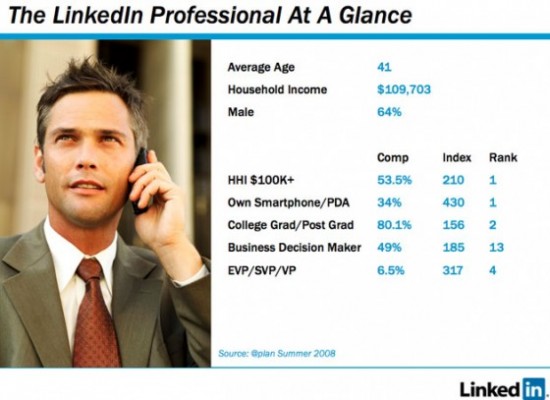
While most social networks struggle to sell advertising due to lack of proper segmentation and totally irrelevant content for advertisers, LinkedIn has so much demand that they decided to launch their own ad network. LinkedIn claims 27 million registered users, according to comScore, 5.2 million from the U.S. visited the site in July (8.7 million worldwide).